
What to Do When Your Garage Door Springs Break
If your garage door spring breaks, stop using the door and keep people, pets, and vehicles away from it. Do not try to lift the door, pull on the cables, or replace the spring yourself. Garage door springs hold significant tension, and a damaged spring can leave the door heavy, unstable, or stuck. The safest next step is to arrange an inspection by a qualified garage door technician.
Quick Lift Garage Doors provides garage door repair and broken spring replacement in Ocean County, NJ, and surrounding areas. While you wait for service, you can make the area safer, gather useful information, and understand what the technician should check. These steps help prevent additional damage and make it easier to decide whether the spring, another component, or the entire door system needs attention.
What to Do Immediately After a Spring Breaks
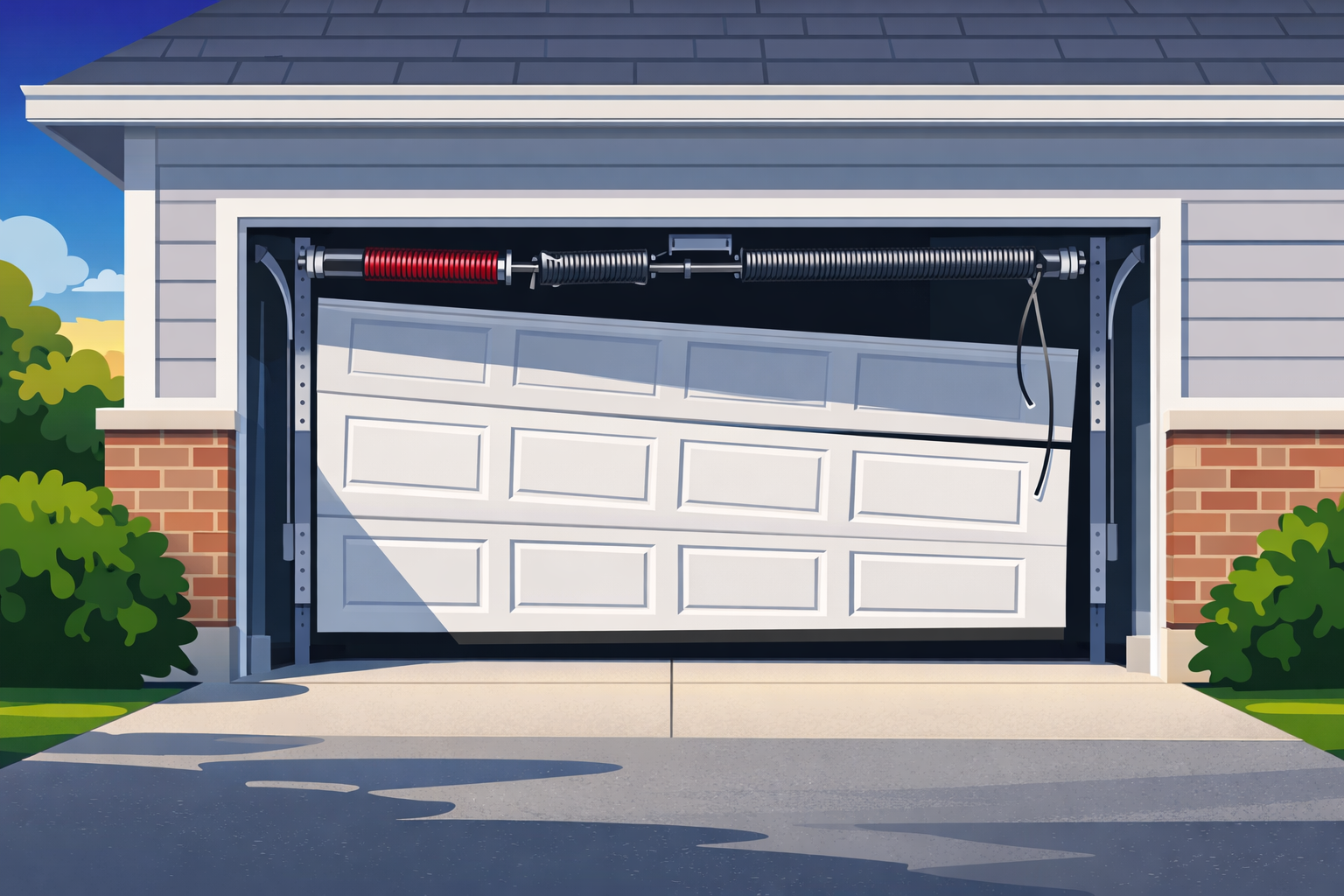
A broken spring does not always look dramatic. You may hear a loud snap, find a coil with a visible gap, notice a loose spring above the door, or discover that the door suddenly will not open. The door may also feel unusually heavy or lift unevenly. These signs can point to a spring problem, but other parts, including cables, rollers, tracks, brackets, and the opener, may also be involved. Treat the door as unsafe until it has been inspected.
The most important decision is whether to leave the door completely alone or take a limited safety step. If the door is closed and stable, leave it closed. If it is partly open, crooked, or hanging unevenly, do not stand beneath it or attempt to force it down. Keep the garage entrance clear and arrange professional help. A technician can determine how to secure the door without creating a second problem.
Stop operating the door
Do not press the wall button, use a remote, or repeatedly test the opener after you suspect a broken spring. The opener is designed to move a properly balanced door; it is not a substitute for the spring system. Continuing to run it can strain the opener or worsen damage to the door, tracks, rollers, or cables.
If the door is closed, avoid trying to open it by hand. A garage door can be much heavier than it feels during normal operation because the springs counterbalance much of its weight. Without that assistance, the door may drop, tilt, or become difficult to control. Keep children and guests away from the opening until the system is checked.
Keep clear of springs, cables, and brackets
Do not touch a broken spring, its brackets, the cables beside the door, or any hardware attached to the spring system. Do not cut, unwind, stretch, clamp, or remove any of these parts. A spring can remain dangerous even when it appears loose, and a cable may be under tension or ready to come off its drum.
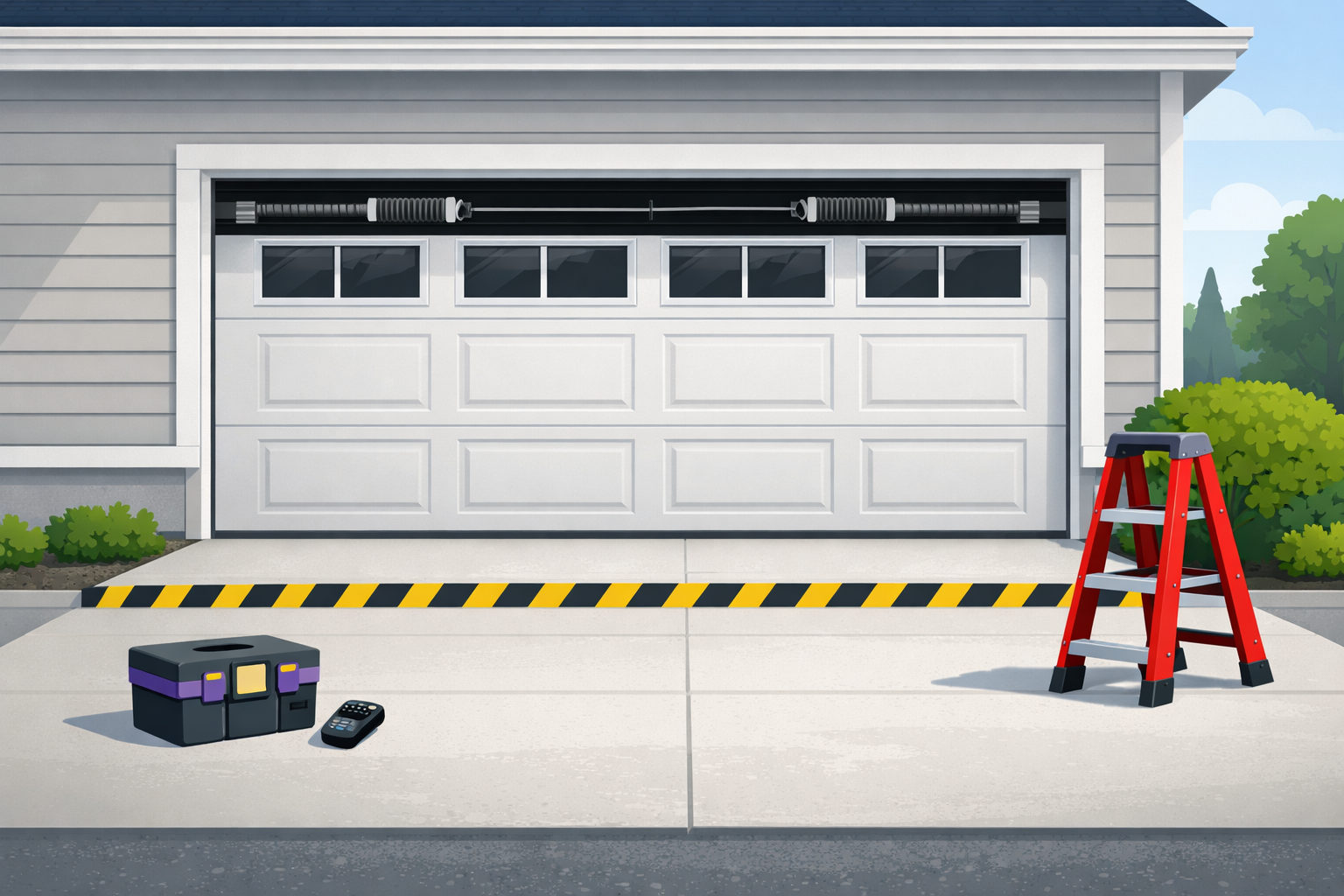
Avoid placing tools, ladders, or stored items near the door while you wait. If the door is open, do not walk or park beneath it. If a cable has come off, a panel is bent, or the door is visibly tilted, describe that when arranging service. Those details help the technician plan a safe inspection.
Disconnect the opener only when it is safe
Some homeowners consider pulling the opener’s emergency release when a spring breaks. That action can separate the opener from the door, but it may also allow an unsupported door to move. Do not pull the release while standing under the door, while the door is partly open, or when the door is unstable. If the door is closed and the release can be accessed safely, follow the opener manufacturer’s instructions or ask a technician what to do.
Never use the emergency release as a way to test whether you can lift the door. The release does not make a broken-spring repair safe. It only changes how the door connects to the opener. A professional should confirm that the door is secure before manually moving it.
How to Prepare for a Safe Spring Repair
A spring replacement should begin with a complete inspection, not simply installing a new spring that looks similar to the old one. The technician needs to assess the door’s size, weight, spring arrangement, condition, and balance, along with the hardware that supports its movement. The correct repair depends on the complete system.
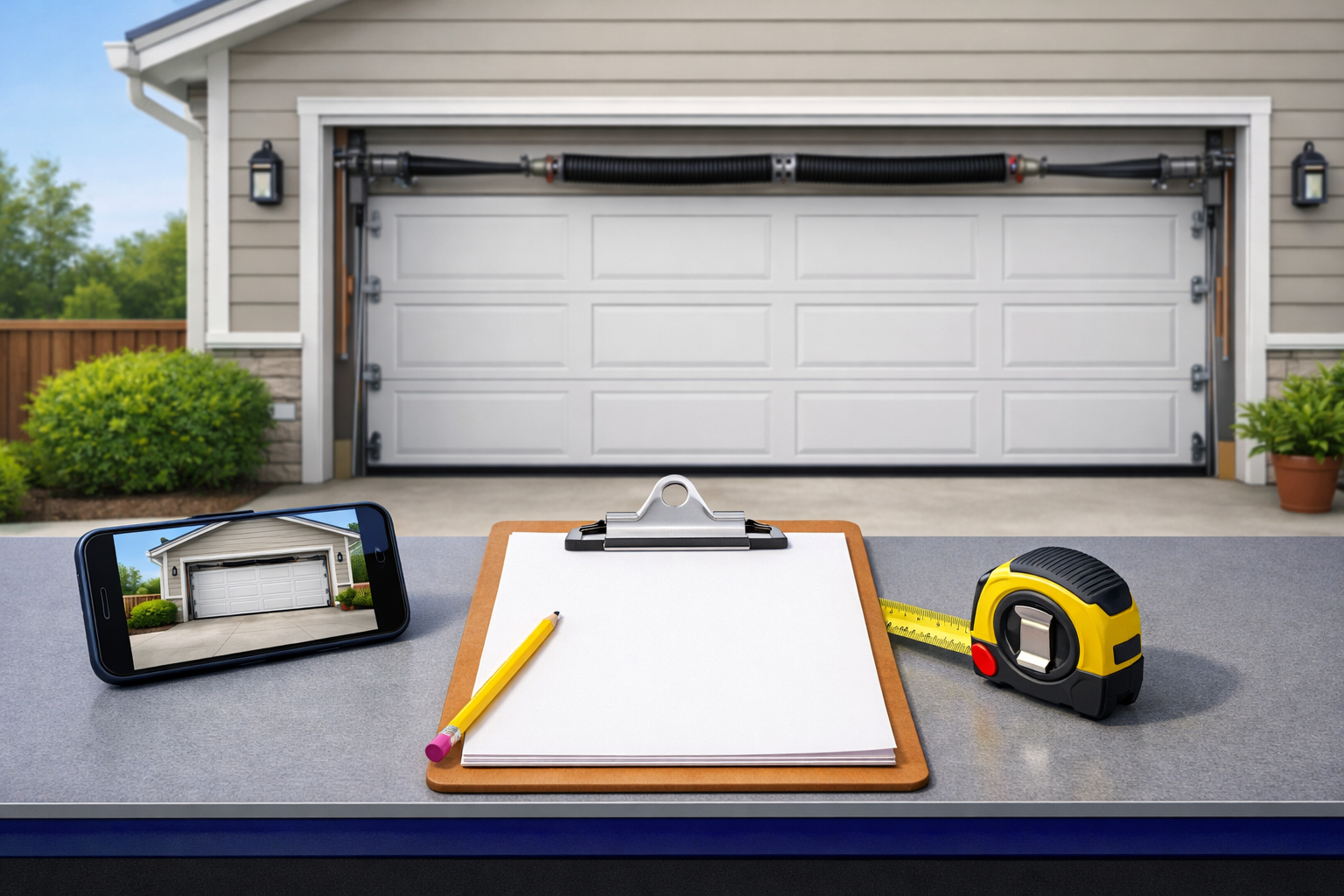
Use the appointment to ask what failed, what else was affected, and what work the quote includes. Quick Lift Garage Doors handles broken spring replacements along with other garage door repairs, including opener problems, misaligned tracks, damaged rollers, and loose or broken hardware. A clear inspection can separate the spring failure from related issues that may need attention now or later.
Share useful details before the visit
Tell the service provider what happened and what the door was doing immediately before the failure. Useful details include a loud popping sound, a door that became heavy, a cable that appears loose, a door that stopped halfway, or an opener that runs without moving the door. Mention whether the door is currently open, closed, crooked, or blocking a vehicle.
If it can be done without approaching the damaged parts, take a photo from a safe distance. A wider picture of the complete door and opening is often more useful than a close-up of the spring. Do not remove covers, climb a ladder, or move the door to get a better image. Safety matters more than collecting a detailed photograph.
Know what the technician should inspect
A proper visit should look beyond the broken coil. The technician should inspect the spring system, cables, drums or related hardware, brackets, hinges, rollers, tracks, panels, and the opener connection. The door’s balance and movement should also be evaluated using safe procedures. If another component is damaged or worn, ask how it affects safe operation and whether it should be repaired at the same time.
The replacement spring must match the door and its hardware. A spring that looks close in size may not provide the correct support. The technician should also check that the door operates properly after the repair and that the opener and safety equipment function as intended. Ask what was replaced, what was adjusted, and what testing was completed before the door is returned to normal use.
Compare repair choices without guessing
A broken spring does not automatically mean the entire garage door needs replacement. In some cases, repairing the spring system may restore safe operation. In other cases, the inspection may reveal damaged panels, worn hardware, track problems, or a door that has broader condition issues. Ask the technician to explain the repair option and any replacement option separately, including the work included with each.
Pricing is specific to the door and the work required, so request an itemized quote rather than relying on a general online estimate. The quote should identify the spring or parts being replaced, labor, any related repairs, removal or disposal if applicable, and the total amount due. If the technician recommends replacing more than the spring, ask which finding supports that recommendation and whether the existing door can be safely repaired.
Hypothetical example: imagine a homeowner hears a snap and sees a gap in one spring, but the door also has a loose cable. A spring-only quote may not describe the full repair if the cable cannot safely remain in service. In a different hypothetical case, the spring is broken but the door, tracks, and hardware pass inspection. The practical choice may be a focused spring repair. The inspection and itemized explanation should guide the decision, not guesswork.
Garage Door Spring Break Questions
Can I open my garage door after the spring breaks?
It is safest not to open it. Without the spring’s support, the door may be too heavy, unstable, or unsafe to lift. Keep the door closed if it is stable and arrange a professional inspection.
Should I use the garage door opener if the spring is broken?
No. Do not repeatedly run the opener or use the remote to test the door. The opener is not designed to compensate for a failed spring and could suffer additional strain or damage.
Can I replace a garage door spring myself?
Spring replacement is not a suitable DIY repair. Springs, cables, brackets, and related hardware can be under significant tension. Do not unwind, cut, remove, or adjust them; have the system inspected by a qualified technician.
What should I tell a garage door repair company?
Explain what you heard or saw, whether the door is open or closed, whether it is crooked, and whether a cable appears loose. A safe-distance photo of the complete door can also help, but do not approach unstable parts to take one.
Does a broken spring mean I need a new garage door?
Not necessarily. A technician should inspect the spring system, door panels, tracks, rollers, cables, hardware, and opener before recommending work. Ask for separate explanations and an itemized quote for repair and replacement options when both are appropriate.