
Wall-Mount vs. Ceiling-Mounted Garage Door Openers: Which Is Better?
The better garage door opener depends on your garage layout, not just the opener’s feature list. A wall-mount opener can free up ceiling space and reduce overhead clutter, while a ceiling-mounted opener is often a practical fit when you have suitable room above the door. The right choice comes down to clearances, door hardware, noise concerns, access needs, and the type of installation your garage can support.
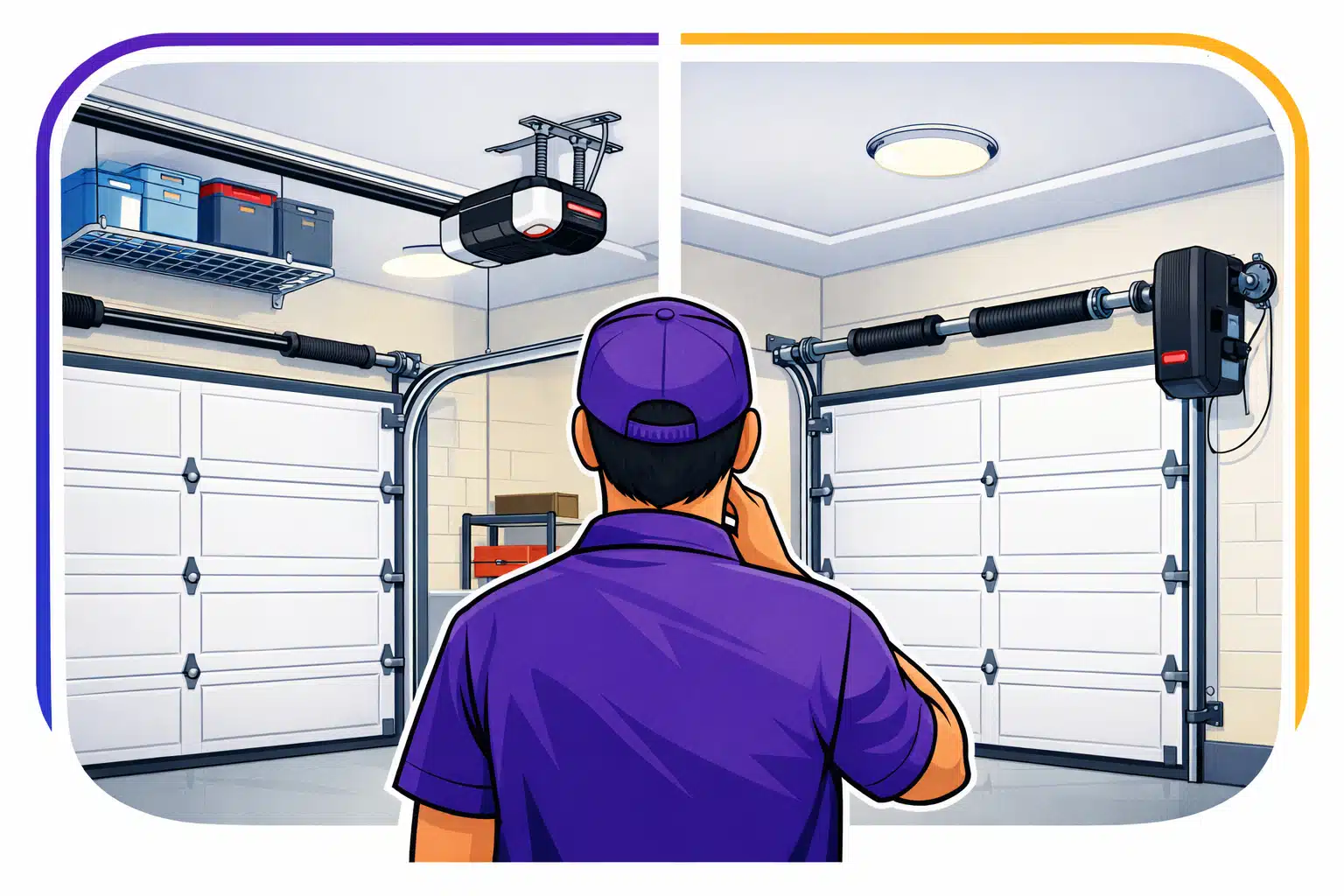
Wall-mount and ceiling-mounted systems can both provide dependable everyday operation when they are correctly matched to the door. Before choosing one, inspect the space around the door, confirm the door’s balance and compatibility, and ask for a professional measurement. Quick Lift Garage Door Install & Service can help homeowners compare their options as part of a garage door opener installation.
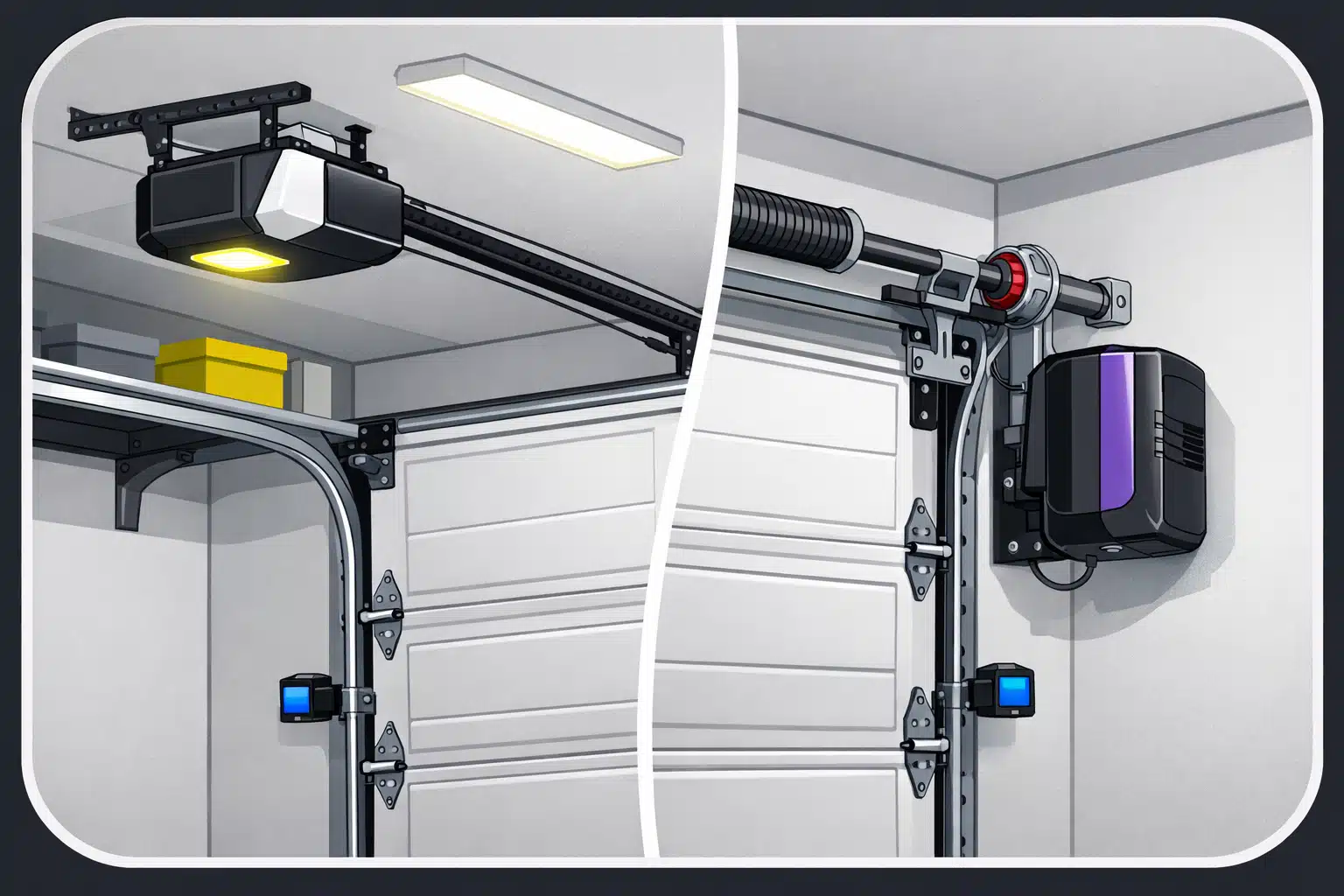
How Wall-Mount and Ceiling-Mounted Openers Differ
The main difference is where the motor and drive system sit. A ceiling-mounted opener, also called a trolley-style opener, is installed above the garage door and uses a rail to move a trolley connected to the door. A wall-mount opener, often called a jackshaft-style opener, is installed beside the garage door and operates the door through its side-mounted hardware. Both systems are designed to lift and close the door, but they place different demands on the garage.
Ceiling-mounted openers use overhead rail space
A ceiling-mounted opener needs a suitable mounting point above the garage door, along with enough room for the opener rail and motor. The rail extends from the motor toward the door, so overhead storage, a low ceiling, light fixtures, ductwork, and other obstructions may affect the installation. The exact clearance depends on the door, track arrangement, opener design, and mounting hardware.
This layout is familiar and works well in many standard garages. It can be a sensible choice when the ceiling is open, the door has compatible tracks, and overhead space is not needed for storage or other equipment. However, a low or crowded ceiling does not automatically rule it out; a technician should measure the space and confirm whether the required hardware can be mounted safely.
Wall-mount openers move the motor to the side
A wall-mount opener sits beside the garage door rather than hanging from the ceiling. This can leave the center of the ceiling open for lighting, storage, or a vehicle lift. It may also create a cleaner overhead appearance because there is no long rail running across the ceiling above the door.
The tradeoff is that the side of the door must have enough room for the opener and its connection to the door shaft or related hardware. The door’s drums, cables, springs, shaft, tracks, and surrounding wall all matter. Many wall-mount systems are intended for particular door and spring arrangements, so do not assume that a side-mounted unit can be attached to every existing door. A compatibility check is essential before ordering one.
Noise, access, and security depend on the whole system
Wall-mount systems are often considered when homeowners want less overhead mechanical noise or a less cluttered ceiling. They may reduce some sounds transmitted through ceiling framing, but the result still depends on the motor, drive system, rollers, hinges, tracks, spring system, and how the garage is attached to the home. A quiet opener cannot fully correct noisy rollers or a door that is out of balance.
A ceiling-mounted opener may be easier to access for some routine inspections because the motor and rail are visible overhead, while a wall-mount unit keeps the central ceiling clear but places its working parts near the side hardware. Security and smart-access features vary by model. Ask which features are included, which require additional equipment, and how the system handles remote access rather than assuming one mounting style is automatically more secure.
How to Choose the Right Opener for Your Garage
Start with the garage itself, then compare opener features. A good decision considers the door’s size and weight, the spring system, available mounting surfaces, ceiling and side clearances, expected use, and the way people enter the garage. The cheapest or most compact-looking option is not necessarily the best fit if it requires major changes to the door hardware or leaves important safety issues unresolved.
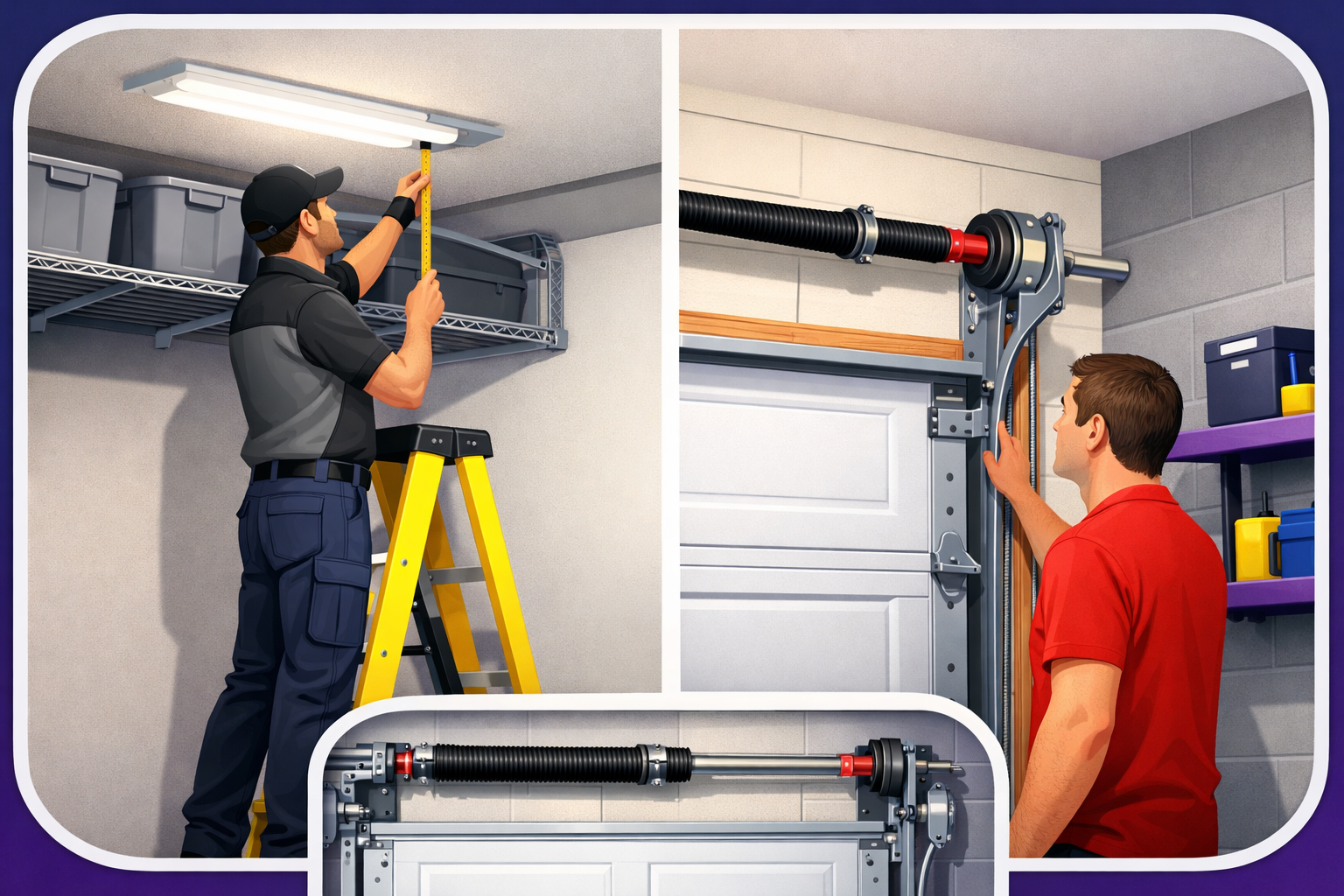
If an existing opener is failing, first determine whether the problem is actually the motor. A broken spring, damaged track, worn roller, poor balance, or misaligned door can make a good opener appear defective. A qualified inspection can distinguish an opener replacement from a larger door repair and help prevent a new unit from being installed on an unsafe system.
Use this clearance and compatibility checklist
Before comparing models, gather the facts an installer will need. Measure the ceiling height and the space above the raised door. Note storage racks, beams, ductwork, lights, and other obstacles. Then check the side room beside the door, the location of the torsion shaft or other spring hardware, and whether the wall can support the proposed opener. Do not remove springs, cables, or other tension-loaded parts to make room.
Also identify the door type, approximate dimensions, number of sections, and how smoothly it moves by hand when disconnected from the opener. A professional should verify that the door is properly balanced and that the proposed opener is rated for the door. Manufacturer instructions control the final requirements, including permitted door configurations, mounting points, electrical needs, safety sensors, and any required accessories.
Match the choice to how you use the garage
A wall-mount opener may make more sense when preserving ceiling space is a priority, the side clearance is available, and the door hardware is compatible. This can be helpful in a garage with overhead storage or a finished ceiling where you do not want a rail crossing the room. It may be less suitable when the side wall is crowded, the door hardware does not meet the manufacturer’s requirements, or substantial modifications would be needed.
A ceiling-mounted opener may be the more straightforward option when the overhead area is open and the existing door arrangement already supports a rail and trolley. It can also be a practical choice when side room is limited. Consider noise transmission, lighting, storage, daily cycles, remote access, and the location of controls. These details usually matter more than whether one mounting style sounds newer or more advanced.
Compare the installation and maintenance tradeoffs
Installation is not just a matter of attaching a motor. The opener must be aligned, secured, connected to the door correctly, and tested with its safety equipment. A wall-mount installation may require careful attention to the side shaft, drums, cables, and spring arrangement. A ceiling-mounted installation may require precise rail positioning and secure overhead support. In either case, the installer should test travel limits, reversing behavior, force settings, manual release operation, and the door’s movement.
Maintenance needs are also shared by both designs. Keep the door and tracks clean, watch for unusual sounds or jerky travel, and have worn rollers, hinges, cables, or springs evaluated. Do not adjust or replace springs yourself; they can hold dangerous tension. If the opener repeatedly strains, reverses, stalls, or leaves the door partly open, stop relying on it until the door and opener are inspected.
Consider this hypothetical example: a homeowner has a low ceiling with storage shelves and plenty of room beside the door. A wall-mount system might preserve useful overhead space, but only if the side hardware and wall structure meet the manufacturer’s requirements. Another hypothetical homeowner has very little side clearance but an open, sturdy ceiling. A ceiling-mounted system may be the better fit after measurements confirm enough rail and motor space. These examples show why layout should lead the decision.
Wall-Mount and Ceiling-Mounted Opener FAQ
Is a wall-mount garage door opener better than a ceiling-mounted opener?
Neither is universally better. A wall-mount opener can preserve ceiling space and may suit a garage with enough side clearance. A ceiling-mounted opener can be practical when overhead space is open and side room is limited. The door hardware and manufacturer requirements should decide the match.
Can a wall-mount opener be installed on any garage door?
No. Compatibility depends on the door design, dimensions, balance, spring and shaft arrangement, side clearance, wall structure, and the opener manufacturer’s instructions. Have the complete system inspected before purchasing a wall-mount unit.
Are wall-mount garage door openers quieter?
They can reduce some overhead motor or rail noise in certain garages, but they are not automatically quiet. Rollers, hinges, tracks, springs, framing, and the opener’s drive system all affect sound. A technician should identify existing door noise before you compare opener types.
What should an installer check before replacing my opener?
The installer should check the door’s balance and movement, dimensions, track and roller condition, spring and cable arrangement, ceiling and side clearances, mounting surfaces, electrical requirements, safety sensors, and compatibility with the proposed opener. They should also test travel limits and reversing functions after installation.
Do wall-mount and ceiling-mounted openers need different maintenance?
Both need attention to unusual sounds, uneven movement, failed safety features, and door balance. Their mounting locations and drive connections differ, so the inspection points may differ as well. Never adjust or replace tension-loaded springs or cables yourself; arrange a professional evaluation.